
Managing everyday tasks can be challenging when you are living with a disability. Simple activities like getting dressed, preparing meals, or moving around the home may require extra support.
This is where NDIS personal care support becomes essential. It is designed to help you with daily routines so you can live safely, comfortably, and with confidence.
With the right NDIS personal care services, you are not just receiving help—you are gaining the freedom to live life your way. In this blog, you will learn what NDIS personal care support includes, who it is for, and how to make the most of your plan.
What Is Included in NDIS Personal Care?
NDIS personal care focuses on supporting you with everyday activities that are important for your health, hygiene, and well-being. These services are flexible and are always tailored to match your personal needs and lifestyle.
Support can be provided:
- In your own home
You receive care in a familiar and comfortable environment, helping you maintain independence in your daily routine. - In shared or supported accommodation
Support is provided in a structured living setting where assistance is available while encouraging independence and social interaction. - While you are out in the community
You can get support when attending appointments, shopping, or participating in social and recreational activities. - As regular daily support or occasional assistance
Services can be arranged based on your needs, whether you require daily help or support at specific times.
Every plan is different, which means your care is built around what works best for you.
Types of Support You May Receive
NDIS personal care services cover a wide range of daily activities. These supports are designed to make your life easier while helping you stay independent.
- Personal Hygiene and Self-Care
You may receive help with showering, bathing, brushing teeth, grooming, and other hygiene routines. This ensures you stay clean, healthy, and comfortable every day. - Dressing and Daily Preparation
Support workers can assist you with getting dressed, choosing suitable clothing, and preparing for your day or bedtime routine. - Toileting and Continence Care
You can receive respectful and private support with toileting and continence needs, ensuring comfort and dignity at all times. - Mobility and Physical Support
If you need help moving around, support workers can assist with getting in and out of bed, using mobility aids, or transferring safely between spaces. - Eating and Meal Support
Support during meals helps ensure you are eating safely and getting the nutrition your body needs. This can include assistance with feeding if required. - Medication Support
You may receive reminders or assistance with taking your medication as part of your daily routine, depending on your plan.
All NDIS personal care support is delivered with care, respect, and a strong focus on your independence.
Who Can Benefit from These Services?
NDIS personal care services are available to people who need support with daily living due to a disability.
You may be eligible if:
- You are approved for the NDIS
You must be a registered participant with an active NDIS plan to access these supports. - Your condition affects your ability to complete daily tasks
Your disability makes it difficult to manage everyday activities without assistance. - The support is considered necessary for your well-being
The care you receive must be reasonable and necessary to help you live safely and independently.
These services support people with:
- Physical disabilities
- Intellectual or developmental conditions
- Mental health challenges
- Neurological disorders
- Other conditions that impact daily functioning
How Personal Care Support Improves Daily Life?
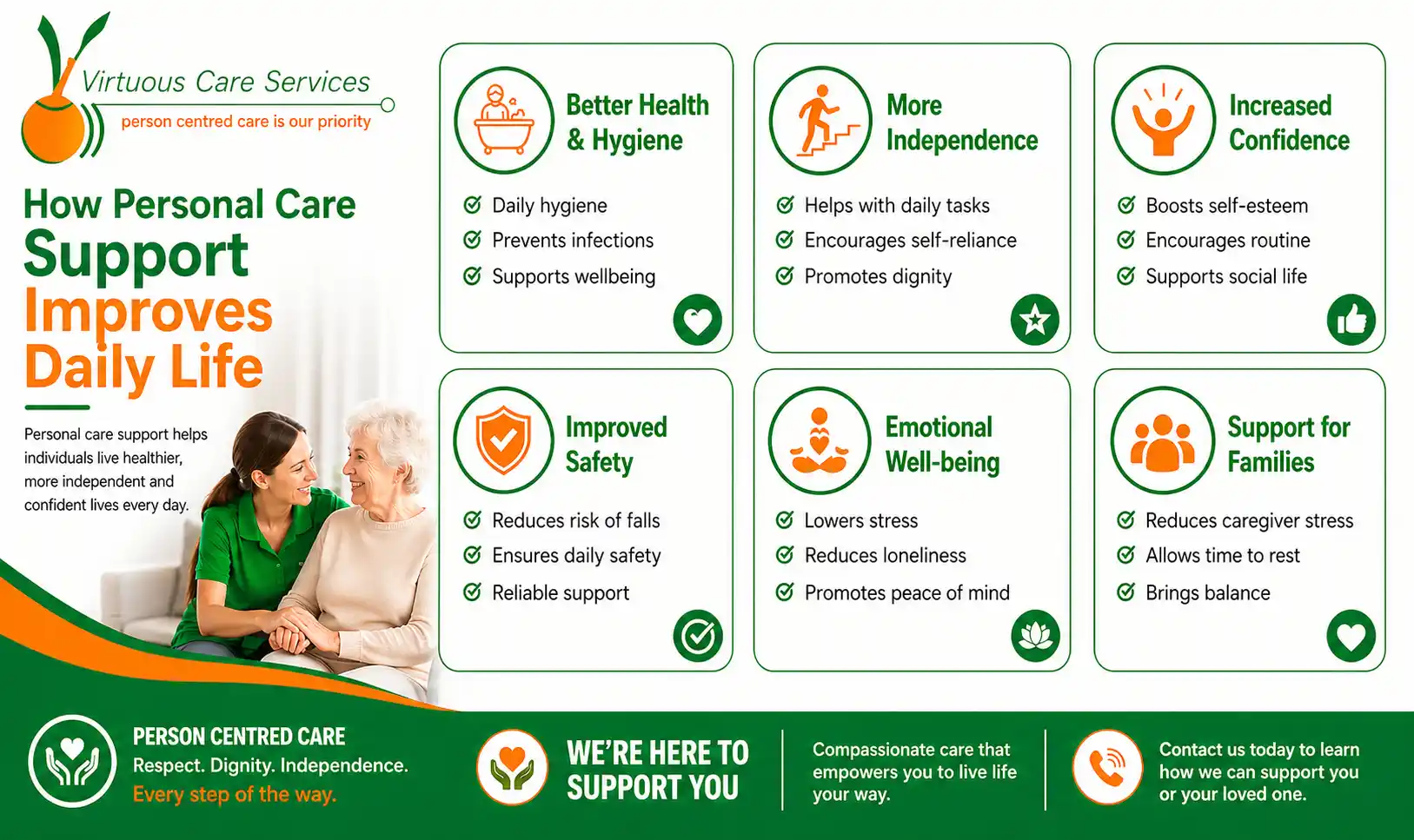
The impact of NDIS personal care support goes beyond basic assistance. It helps improve many areas of your life.
Better Health and Hygiene
Regular support helps ensure that personal hygiene routines—such as bathing, grooming, oral care, and clean clothing—are maintained consistently. This not only promotes physical health but also helps prevent infections, skin conditions, and other hygiene-related issues. Good hygiene can also positively affect social interactions and overall quality of life.
Tips:
- Set a daily hygiene schedule to build consistency
- Keep essential items (soap, towels, toothbrush) within easy reach
- Use reminders or alarms if needed
- Choose products suitable for sensitive skin or specific health needs
More Independence
With the right level of support, individuals can perform daily tasks more independently, from dressing and cooking to managing appointments. This sense of autonomy fosters dignity and allows people to stay actively involved in their own lives.
Tips:
- Break tasks into smaller, manageable steps
- Use assistive tools (grab bars, adaptive utensils, etc.)
- Encourage participation rather than doing everything for the person
- Celebrate small achievements to build motivation
Increased Confidence
When individuals feel prepared and supported in their daily routines, their confidence naturally improves. Being able to complete tasks and maintain personal care can boost self-esteem and encourage social engagement.
Tips:
- Maintain a consistent daily routine
- Wear comfortable, well-fitting clothes that make you feel good
- Practice self-care activities regularly
- Engage in hobbies or activities that build a sense of accomplishment
Improved Safety
Having a steady routine and reliable support can help reduce stress, worry, and feelings of loneliness. Emotional well-being gets better when people feel safe, understood, and cared for.
Tips:
- Stay in touch with friends, family, or community groups
- Try relaxation methods like deep breathing or meditation
- Keep a regular sleep schedule
- Talk about your feelings with someone you trust
Emotional Well-being
A stable routine and reliable support system can significantly reduce stress, anxiety, and feelings of isolation. Emotional well-being improves when individuals feel secure, understood, and cared for.
Tips:
- Stay connected with friends, family, or community groups
- Practice relaxation techniques like deep breathing or meditation
- Maintain a regular sleep schedule
- Talk openly about feelings with a trusted person
Support for Families
Taking care of a family member can be hard and tiring, both physically and emotionally. Getting extra help can make it easier. Support gives carers time to rest and look after themselves, while making sure their loved ones get good care.
Tips:
- Take regular breaks or use respite care
- Share tasks with other family members when possible
- Ask for professional help if needed
- Join support groups for advice and encouragement
Choosing the Right NDIS Provider
Finding the right provider for your NDIS personal care is very important. The right support can make a big difference in your everyday life.
When choosing a provider, think about:
- The experience and training of their support workers
- Consistency in who provides your care
- Respect for your personal preferences and culture
- Flexibility in how services are delivered
- Clear communication and understanding
A good provider will listen to you and adjust their services to meet your needs.
Common Challenges and How to Manage Them
At times, participants may face problems with their NDIS personal care services. These problems can include:
- Having different support workers too often
- Care that doesn’t fit your needs
- Poor communication
- Schedules that don’t match your daily routine
You can manage these problems by being involved in your care. Talking clearly and working with the right provider can make your experience much better.
What you can do:
- Clearly tell your support team what you need and expect
- Take part in planning and reviewing your support
- Give regular feedback to help improve your care
- Choose providers who are consistent and build long-term relationships
Tips to Get the Best Results from Your Plan
Make the most of your NDIS personal care support by taking an active role and talking about your needs. When you tell your support team what you like and what works for you, your care can be tailored just for you.
Check your plan regularly, see what helps the most, and don’t be afraid to ask for changes. Working with providers who listen to you and include you in decisions can make you feel more confident and in control.
Quick Tips:
- Clearly say what you need and your daily routines
- Speak up about what makes you comfortable
- Review and update your plan often
- Keep track of what works best for you
- Choose providers who involve you in decisions
Your plan should always match your needs now and your goals for the future.
Final Thoughts
NDIS personal care services do more than just help you with daily tasks. They give you the support you need to live with confidence, independence, and dignity.
The right support helps you make a daily routine, stay safe, and enjoy your life without extra stress. With a good plan and the right provider, you can be in control of your day and do things your way.
Choose Virtuous Care Services for caring and reliable support. Contact us today to start living with more confidence and independence.
