NDIS Funding in 2026 can help eligible people with disabilities access supports that make daily life safer, easier and more independent. The process starts before the form. You need to check eligibility, collect strong evidence and explain how disability affects everyday tasks, not just name the diagnosis.
This guide explains how to apply for NDIS funding, what documents you may need, what the NDIA looks for, and what happens after you submit your application.
What Is NDIS Funding?
NDIS funding gives eligible people access to disability supports through the National Disability Insurance Scheme. Many people shorten this to the NDIS.
The NDIS helps people with permanent and significant disability build skills, become more independent and take part in everyday life. Support may include help with daily tasks, therapy, assistive technology, home changes, transport and social activities.
The NDIS does not work like a normal welfare payment. It funds support that relates to your disability, matches your goals and follows current NDIS planning rules.
Who Can Apply for NDIS Funding in 2026?
NDIS Funding in 2026 applies to people who meet age, residency and disability or early intervention rules.
You may meet the basic requirements when you:
- Are younger than 65 on the day the NDIA receives your complete application
- Live in Australia
- Hold Australian citizenship, permanent residency or a Protected Special Category visa
- Have a disability caused by an impairment that will likely last for life
- Need disability-specific supports to complete daily activities
- Meet early intervention requirements because early support may reduce future support needs
Children have a separate early childhood pathway. The NDIS early childhood approach supports children younger than 6 with developmental delay and children younger than 9 with disability.
How Do You Apply for NDIS Funding Step by Step?
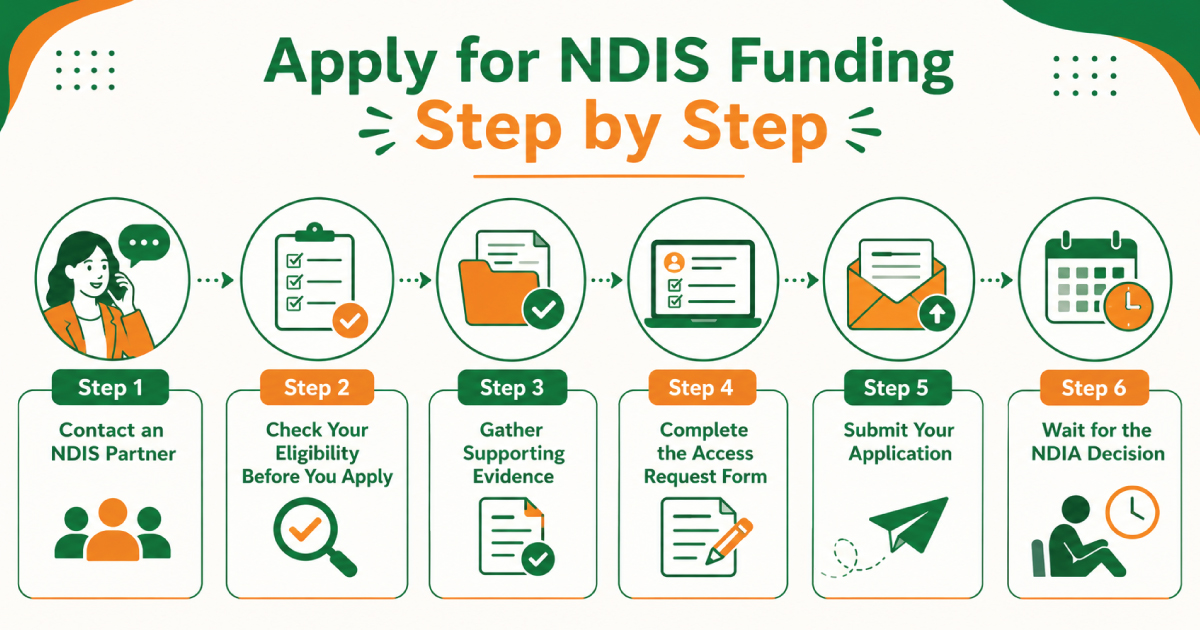
The NDIS application process has six main steps. A clear and organised approach can help you avoid delays. It also helps the NDIA understand your support needs.
Step 1: Contact an NDIS Partner
Start by contacting an NDIS partner near you. This may be a Local Area Coordinator, an Early Childhood Partner or the NDIA. The right contact depends on your age, location and situation.
An NDIS partner can explain:
- The application process
- The eligibility rules
- The evidence you need
- The NDIS planning framework
- Community and mainstream support near you
- How support coordination may help after your plan gets approved
- How to complete the application
You can meet in person, by phone or online. You can also take a family member, friend, advocate, support worker or carer with you.
Step 2: Check Your Eligibility Before You Apply
A quick eligibility check can save time. Start with three key areas: age, residency and disability impact.
The NDIA looks at how your disability affects your daily life. A diagnosis matters, but your daily support needs matter too.
Think about these questions:
- Do you need help with showering, dressing or eating?
- Do you need support to communicate?
- Do you need help moving safely at home or in the community?
- Does your disability affect work, study or social activities?
- Do you need regular help from family, carers or paid workers?
- Do you need equipment, therapy or home changes?
Clear answers help your treating health professionals write stronger reports.
Step 3: Gather Supporting Evidence
Supporting evidence plays a big role in your application. The NDIA needs to understand your disability, how long it may last and how it affects your daily life.
Useful evidence may include:
- GP letters
- Reports from treating health professionals
- Specialist reports
- Occupational therapy reports
- Physiotherapy reports
- Psychology or psychiatry reports
- Speech pathology reports
- Functional capacity assessments
- Hospital discharge summaries
- Carer statements
- School or early childhood reports
- Statements from support workers
Ask your treating health professionals to explain the real-life impact of your disability. A short letter that only lists your diagnosis may not give enough detail.
A stronger report may explain that a person needs hands-on support to shower safely because poor balance increases the risk of falling. This type of detail helps the NDIA understand the support need.
Step 4: Complete the Access Request Form
The Access Request Form asks for your personal details, residency details, disability information and consent. Your NDIS partner can help you complete it. You can also fill it out yourself.
Before you submit the form, check that:
- Your name and date of birth match your identity documents
- Your contact details are correct
- Your residency evidence is clear
- Your disability evidence explains your daily support needs
- Your treating health professionals have signed where needed
- Your representative details are correct, if you have one
Small mistakes can slow things down. Read the form once more before you send it.
Step 5: Submit Your Application
You can submit your application through the NDIS service hub, by mail or in person at a local office. Your NDIS partner may also submit it for you.
Keep copies of every document. Save emails, receipts and the date you sent your application.
The NDIA may ask for more information. Try to respond quickly because missing evidence can delay your decision.
Step 6: Wait for the NDIA Decision
The NDIA aims to give you a decision within 21 days after it receives your application and all supporting evidence.
The decision letter will tell you if you can access the NDIS. Approval means you can move into the planning stage. A refusal letter should explain why the NDIA did not approve your application.
A refusal does not always mean the process is over. You can ask for a review. You can also apply again later if your situation changes or you get stronger evidence.
What Documents Do You Need for an NDIS Application?
Most applications need identity, residency and disability evidence. The exact documents depend on your situation.
| Document Type | Examples | Why It Matters |
|---|---|---|
| Identity | Passport, birth certificate, driver licence, Medicare card | Confirms who you are |
| Residency | Australian passport, citizenship certificate, visa evidence, Centrelink details | Confirms you meet residency rules |
| Disability Evidence | Reports, assessments, letters, statements | Shows impairment, permanence, and daily impact |
| Functional Impact Evidence | OT report, carer statement, support worker notes | Shows what daily tasks you need help with |
| Early Intervention Evidence | Child development reports, therapy reports, paediatrician letters | Shows why early support may reduce future needs |
The best evidence uses plain, specific examples. It should explain what happens on a normal day, what support you need and what risks appear without that support.
What Does the NDIS Fund?
The NDIS funds support, services and equipment that relate to your disability. These supports must also fit your NDIS plan.
Funded supports may include:
- Help with daily personal care
- Therapy and allied health support
- Assistive technology
- Home or vehicle changes
- Support workers
- Skill-building support
- Social and community activities
- Specialist disability accommodation, if you are eligible
The NDIS also has rules about what it will and will not fund. Some things do not count as NDIS supports. These may include everyday living costs, illegal items, supports paid for by another system, alcohol, drugs and sexual services.
A simple rule can help: the support should relate to your disability, help with your goals and match your plan.
How Can You Strengthen Your NDIS Application?
A strong NDIS application should explain your story clearly. It should not make your needs sound bigger or smaller than they are.
Explain Functional Impact
The NDIA needs to understand how your disability affects your daily life. Do not only write “needs support”. Explain the task, the risk and the type of help you need.
Example:
Weak: “Has trouble with cooking.”
Stronger: “Needs support while cooking because poor grip and low focus may lead to burns, dropped items or unsafe meal preparation.”
This gives the NDIA a clearer picture of your support needs.
Use Current Evidence
Old reports may still help, but recent evidence often gives a better picture. Ask your treating health professionals to update your reports if your condition, skills or support needs have changed.
Current reports can help the NDIA understand what support you need now.
Include Informal Support Details
Family members and carers often help with daily tasks. Include what they do and how often they help.
For example:
- Mum helps with morning routines every day
- A partner manages appointments and medicine reminders
- A sibling helps with transport twice a week
- A support worker helps with community access
These details help the NDIA understand your real support needs.
Prepare for the Planning Conversation Early
NDIS approval does not mean every support will be funded straight away. Your first plan will link your goals with reasonable supports.
Before the planning meeting, write down:
- Your daily challenges
- Your short-term goals
- Your long-term goals
- Your current supports
- Any support gaps
- Equipment or therapy needs
- Safety concerns
- Community, work or study goals
A written list can help you feel more prepared and confident during the meeting.
Common Mistakes to Avoid
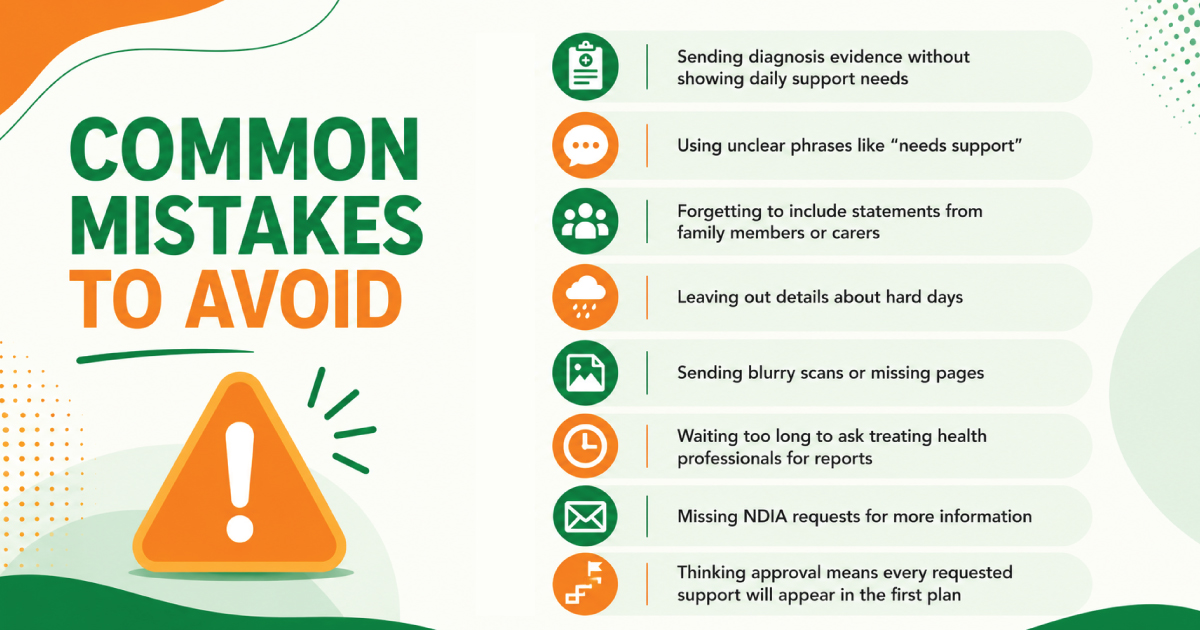
Many people find the NDIS application process confusing. It asks for details that people may not have written down before.
Common mistakes include:
- Sending diagnosis evidence without showing daily support needs
- Using unclear phrases like “needs support”
- Forgetting to include statements from family members or carers
- Leaving out details about hard days
- Sending blurry scans or missing pages
- Waiting too long to ask treating health professionals for reports
- Missing NDIA requests for more information
- Thinking approval means every requested support will appear in the first plan
The safest approach is simple: prepare early, give clear details and keep copies of your records.
What Happens After You Get Approved?
After approval, the NDIA will contact you to create your first NDIS plan. This stage is part of the NDIS planning framework. It links your goals, support needs and disability-related supports.
Your plan may include different funding areas, such as:
- Core supports for everyday activities
- Capacity building supports to build skills and independence
- Capital supports for equipment, technology or home changes
Support coordination may also appear in your plan. This can help you understand your funding, find providers and organise your supports.
A support coordinator can also help you solve service issues and use your plan with more confidence.
The NDIS works with state and territory services, health systems, schools and community supports. Some supports sit inside the NDIS. Other supports may come from health, housing, education or other government services.
What Should You Do If Your Application Gets Rejected?
A rejection can feel upsetting, but you still have options. Read the decision letter closely and look at the reason the NDIA gave.
You may be able to:
- Ask the NDIA to explain the decision
- Request an internal review
- Gather stronger evidence
- Ask an advocate for help
- Apply again later when your situation changes
- Explore community, health, education or aged care supports
Evidence gaps often cause problems. A new report that clearly explains permanence and functional impact may strengthen a future application or review.
FAQ: NDIS Application Questions for 2026
Who can apply for NDIS funding in 2026?
People under 65 can apply for NDIS funding if they live in Australia and meet the residency rules. They must also have a disability that will likely last for life. Some people may also get support through early intervention if early help can reduce future support needs.
What evidence do I need for an NDIS application?
You usually need proof of identity, residency documents and disability evidence. Good evidence explains your diagnosis and how your disability affects daily life. This may include mobility, communication, personal care, learning, work or social activities.
How long does an NDIS access decision take?
The NDIA says it will give you a decision within 21 days after it receives your application and all the needed evidence. The process may take longer if you need extra reports, assessments or documents.
Can parents apply for NDIS funding for a child?
Yes. Parents and authorised representatives can help a child apply for NDIS funding. Children under 9 may get support through the early childhood approach. Children under 6 with developmental delay may also receive early support.
What happens after NDIS approval?
The NDIA will move you to the planning stage. You will talk about your goals, current supports, daily challenges and support needs. Your first plan will list the funded supports that relate to your disability and goals.
Can I use NDIS funding for anything I need?
No. You can only use NDIS funding for supports that relate to your disability, fit your plan and count as NDIS supports. The NDIS has lists that explain what you can and cannot use funding for.
What should I do if my NDIS application gets rejected?
Read the refusal letter carefully. Ask the NDIA to explain the decision if anything feels unclear. You can request a review, gather stronger evidence or apply again later if your situation changes. A disability advocate or NDIS support provider may also help you understand your next steps.
Does the NDIS work with state and territory services?
Yes. The NDIS works with state and territory services, health systems, schools, housing services and community supports. The NDIS funds disability-related supports, while other services may still cover medical care, education, housing or general community help.
Why do treating health professionals matter in an NDIS application?
Treating health professionals can explain your diagnosis, support needs and daily challenges. Their reports help the NDIA understand how your disability affects your life, what risks you may face without support and what services may help you build skills and independence.
Final Thoughts
Applying for the NDIS can feel stressful at first, especially when you need to gather reports and explain personal challenges. A clear process makes it easier.
Start with eligibility. Gather evidence that explains daily life, not just diagnosis. Keep copies of every document. Ask for help from an NDIS partner, treating professional, advocate or trusted support person.
The right preparation gives the NDIA a clearer view of your needs and gives you a stronger foundation for your first plan.
Need help understanding your NDIS options? Contact Virtuous Care Services for friendly guidance and practical disability support that fits your needs.
