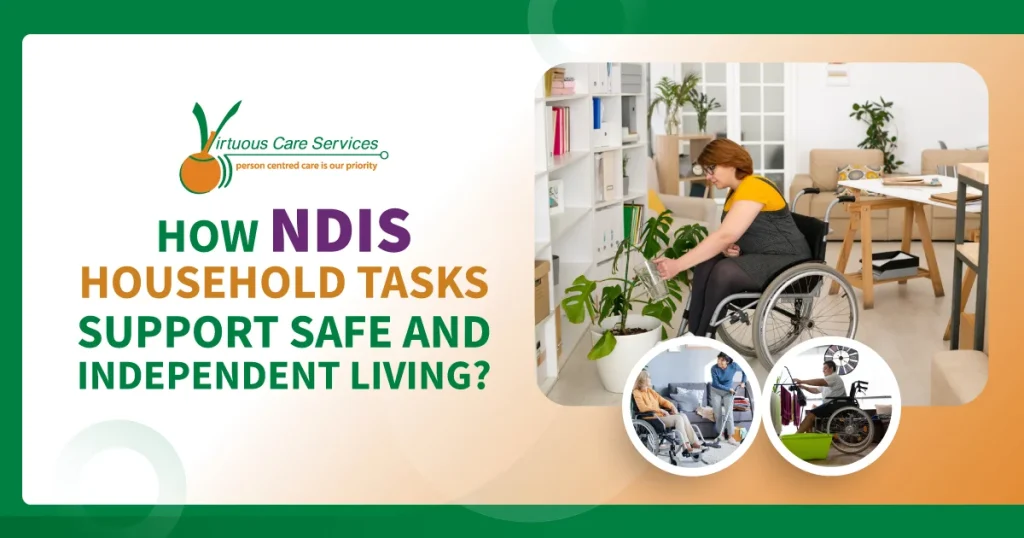
For many people living with a disability, everyday household tasks can feel overwhelming. Activities such as cleaning the house, cooking meals, doing laundry, or shopping for groceries may seem simple to others, but they can be physically tiring, mentally stressful, or even unsafe for someone with a disability. These daily challenges can slowly affect a person’s health, confidence, and independence.
This is where the National Disability Insurance Scheme (NDIS) plays an important role. Through NDIS household tasks support, participants can receive practical help at home so they can live safely, comfortably, and with greater independence. This article explains how household task support works, why it is important, and how it can make a real difference in everyday life. The content is written in easy words to help participants, families, and carers clearly understand this support.
Life Before Household Task Support
Before receiving household task support, many people with disabilities struggle to keep up with daily chores. Imagine waking up and seeing dirty floors, laundry piling up, and no meals prepared for the day. For someone with limited mobility, chronic pain, fatigue, or mental health challenges, completing these tasks can be exhausting and discouraging.
Many NDIS participants face similar challenges in their daily lives. Tasks such as vacuuming, doing laundry, bending, standing for long periods, or cooking meals can be difficult due to limited mobility, chronic pain, fatigue, or mental health conditions. Over time, these challenges can affect physical health, emotional well-being, and a person’s sense of independence. Household tasks may not seem urgent at first, but when they are left undone, they can lead to unsafe living conditions, increased stress, and reduced quality of life. A messy or unclean home can also affect mental well-being, making people feel overwhelmed or anxious in their own space.
What Are NDIS Household Tasks?
NDIS household tasks support means help with everyday household chores that are hard to do because of a disability. This support includes house cleaning, mopping floors, and washing, drying, and folding clothes. These services are part of NDIS household support and are funded under Core Supports, known as assistance with daily living. The goal is to help participants live safely and comfortably while supporting independent living.
Household task support is flexible and tailored to each participant’s needs. It focuses on helping people maintain a safe and comfortable home while encouraging independence wherever possible. Support can be provided in private homes, shared accommodation, or supported living environments.
How NDIS Household Tasks Can Help
NDIS household task support is designed to make daily life easier and safer. Support workers can assist with cleaning, laundry, cooking, grocery shopping, and organising the home. These services help participants manage their energy levels and reduce physical strain.
With NDIS household task support in place, daily routines can become more manageable and less stressful. Support workers help participants develop simple and practical routines for cleaning, laundry, and meal preparation. Instead of feeling overwhelmed, participants receive assistance that suits their abilities. Over time, many participants can take part in small tasks at their own pace, which can help build confidence and independence.
This kind of support is not just about completing chores. It is about working together to create a routine that suits the participant’s abilities, goals, and lifestyle.
The Benefits of Household Task Support
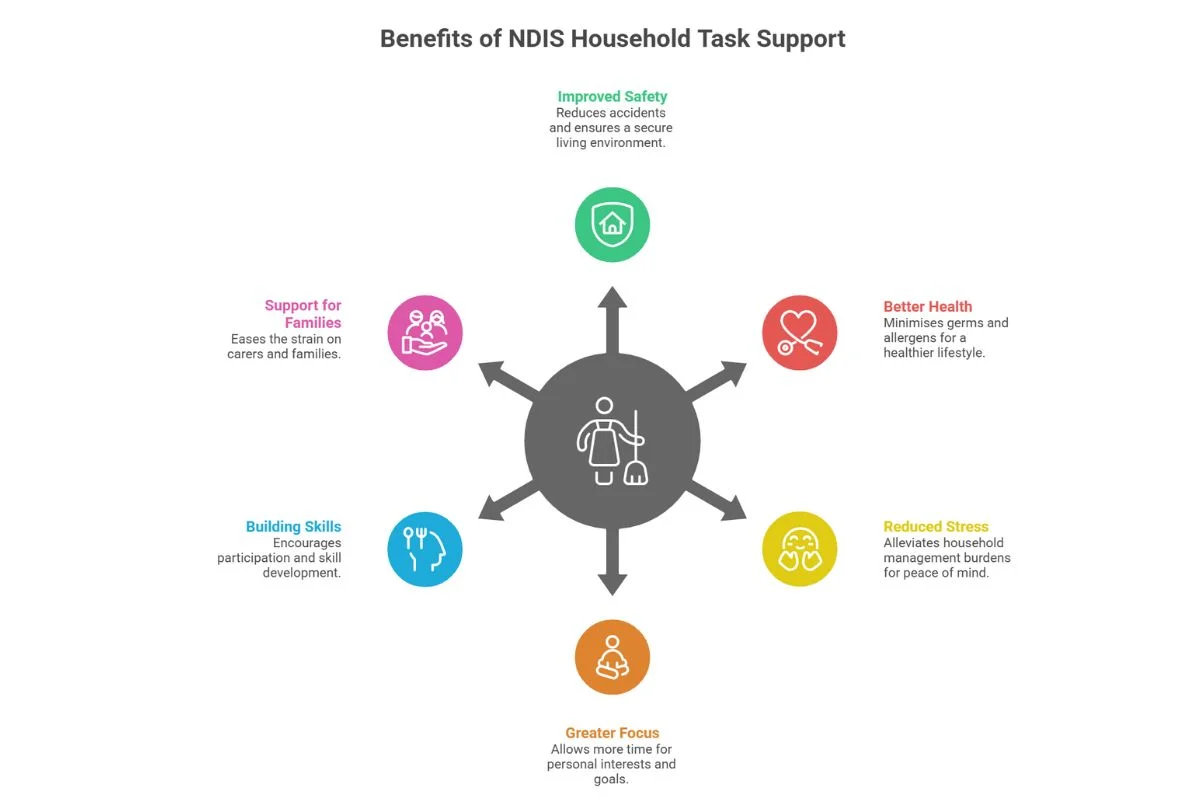
NDIS household task support provides many benefits that go beyond keeping a home clean. It plays an important role in improving safety, health, independence, and overall quality of life for NDIS participants and their families.
- Improved Safety at Home: A clean and organised home reduces the risk of accidents such as slips, trips, and falls. Regular cleaning services help keep living areas clear and safe. Tidy walkways and well-maintained spaces are especially important for people with mobility, balance, or coordination challenges.
- Better Health and Hygiene: Routine cleaning and laundry reduce germs, dust, and allergens in the home. Reliable cleaning services support better physical health and lower the risk of illness. Support with meal preparation also helps with healthy eating and safely assisting with daily life.
- Reduced Stress and Anxiety: Managing a full household chores list can feel overwhelming. When NDIS support offers reliable help with daily tasks, stress levels are reduced. This allows participants to feel more relaxed and comfortable in their own homes.
- Greater Focus on Daily Life and Goals: With help assisting with daily life, participants can spend more time on activities that matter to them, such as hobbies, work, study, or social time. This balance supports emotional well-being and personal development.
- Building Skills and Independence: Household task support is provided in a way that encourages participation. Support workers guide tasks step by step, helping participants learn routines, build skills, and gain confidence while receiving NDIS support.
- Support for Families and Carers: Household task support also helps families and carers. When cleaning services and daily chores are shared, carers experience less physical and emotional strain, while living areas remain safe, clean, and comfortable.
A Day with Household Task Support
In everyday situations, household task support helps create a calm and organised living environment. Support workers may assist with cleaning, laundry, meal preparation, and organising living spaces. Once these tasks are completed, participants can enjoy their day feeling relaxed and comfortable in their home. Household tasks that once caused stress are managed efficiently, allowing more time and energy for rest, hobbies, or community activities.
Skills Participants Can Learn Over Time
NDIS household task support is also about learning skills that last. With guidance and encouragement, participants may learn how to cook simple meals, organise laundry routines, keep living spaces tidy, and shop for groceries more efficiently.
Learning these skills helps participants feel more in control of their lives. Even small achievements can build confidence and motivation, leading to greater independence over time.
Challenges in Household Task Support
While NDIS household task support is very helpful, some challenges can arise. Being aware of these challenges can help participants and providers manage support more effectively.
- Limited Funding: In some cases, NDIS funding may not cover all the household support hours needed. When this happens, a plan review can be requested to explain how the disability affects daily tasks and why additional support may be required.
- Choosing the Right Provider: Finding a suitable provider can take time. A good provider should communicate clearly, respect personal preferences, and deliver support that aligns with individual goals. The focus should always be on supporting independence, not creating reliance.
- Maintaining Independence: Some participants may worry about becoming too dependent on household support. To address this, providers should encourage participation in tasks and support skill development wherever possible.
- Scheduling Difficulties: Support schedules may not always fit neatly into daily routines. Flexibility and open communication between participants and providers can help create a schedule that works for everyone.
By addressing these challenges early and maintaining clear communication, household task support can remain effective and beneficial.
How to Access Household Task Support
Household task support is included in an NDIS plan when it is considered reasonable and necessary. During the planning meeting, participants should explain which household tasks they struggle with and how their disability affects their ability to complete them.
Once approved, participants can choose a registered provider that suits their needs. Together, they can create a schedule that fits the participant’s routine and goals. Support can be adjusted over time as needs change.
How Household Task Support Improves Quality of Life
NDIS household task support plays a key role in improving the quality of life. By helping participants maintain a clean, safe, and organised home, it supports physical health, mental well-being, and independence.
Participants are able to focus on their personal goals, whether that means building skills, joining community activities, or simply enjoying daily life without constant stress. A supportive home environment makes a big difference to confidence and happiness.
Conclusion
Household tasks may seem simple, but for people living with disabilities, they can be challenging, tiring, and sometimes unsafe. NDIS household task support provides the practical help needed to manage daily life with greater ease and confidence.
Through support with cleaning, laundry, cooking, and shopping, participants can live more safely and comfortably in their own homes. This support also helps build everyday skills, reduce stress, and promote greater independence over time.
With the right provider and a personalised NDIS plan, household task support empowers participants to live confidently, independently, and with dignity. Virtuous Care Services is committed to delivering compassionate and reliable household task support, helping participants maintain a clean, safe, and comfortable living environment while supporting their goals and well-being.
